˗ˏˋ Contextual Research ˎˊ˗
Summary
For the first part of my Final Major Project, I needed to do some research on the topic that I have chosen to show how I explored different ideas and ended up with a final plan, this is in relation with LO1, LO2, and LO7 in the brief. It is important for me to research this in depth, as I have to be careful with how I present it. It is a sensitive topic and can be easily offensive to people who believe in the religions I portray. For it to be done properly and respectfully, I have to go into detail on the information I show in my project.
During this stage, I will show my progression of ideas and how I settle on a final plan; exploring different sub-themes, art-styles, and history in relation to my theme. By doing this, I can be inspired by both creations and real-world history and apply them to my project.
⠤⠤⠤⠤⠤⠤⢤⣄⣀⣀⡀⠀⠀⠀⠀⠀⠀⠀⠀⠀⠀⠀⠀⠀⠀⠀⠀⠀⠀⠀⠀⠀⠀⠀⠀⠀⠀⠀⠀⠀⠀⠀⠀⠀⠀⠀⠀⠀⠀⠀⠀⠀⠀⠀⠀⠀⠀⠀
⠀⠀⠀⠀⠀⠀⠀⠀⠀⠈⠉⠙⠒⠀⠀⠀⠀⠀⠀⠀⠀⠀⠀⠀⠀⠀⠀⠀⠀⠀⠀⠤⠤⠶⠶⠶⠦⠤⠤⠤⠤⠤⢤⣤⣀⣀⣀⣀⣀⣀⠀⠀⠀⠀⠀⠀⠀⠀
⠀⠀⠀⠀⢀⠄⢂⣠⣭⣭⣕⠄⠀⠀⠀⠀⠀⠀⠀⠀⠀⠀⠀⠀⠀⠀⠀⠀⠀⠀⠀⠀⠀⠤⠀⠀⠀⠤⠀⡀⠀⠀⠀⠀⠀⠀⠀⠀⠀⠉⠉⠉⠉⠉⠉⠉⠉⠉
⠀⠀⢀⠜⣳⣾⡿⠛⣿⣿⣿⣦⡠⠀⠀⠀⠀⠀⠀⠀⠀⠀⠀⠀⠀⠀⠀⠀⠀⠀⠀⠠⣤⣤⣤⣤⣤⣤⣤⣤⣤⣍⣀⣦⠦⠄⣀⠀⡀⠀⠀⠀⠀⠀⠀⠀⠀⠀
⠀⠠⣄⣽⣿⠋⠀⡰⢿⣿⣿⣿⣿⣦⠀⠀⠀⠀⠀⠀⠀⠀⠀⠀⠀⠀⠀⠀⠀⠀⠀⠀⣼⣿⡿⠛⠛⡿⠿⣿⣿⣿⣿⣿⣿⣷⣶⣿⣁⣂⣤⡄⠀⠀⠀⠀⠀⠀
⢳⣶⣼⣿⠃⠀⢀⠧⠤⢜⣿⣿⣿⣿⣷⠀⠀⠀⠀⠀⠀⠀⠀⠀⠀⠀⠀⠀⠀⠀⢠⣾⠟⠁⠀⠀⠀⡇⠀⣀⡈⣿⣿⣿⣿⣿⣿⣿⣿⣿⣧⡀⠁⠐⠀⣀⠀
⠀⠙⠻⣿⠀⠀⠀⠀⠀⠀⢹⣿⣿⡝⢿⡄⠀⠀⠀⠀⠀⠀⠀⠀⠀⠀⠀⠀⠀⢰⡿⠋⠀⠀⠀⠀⠠⠃⠁⠀⠀⠙⢿⣿⣿⣿⣿⣿⣿⣿⣿⣿⣶⣿⡿⠋⠀⠀
⠀⠀⠀⠙⡄⠀⠀⠀⠀⠀⢸⣿⣿⡃⢼⠁⠀⠀⠀⠀⠀⠀⠀⠀⠀⠀⠀⠀⠀⠘⠁⠀⠀⠀⠀⠀⠀⠀⠀⠀⠀⠀⠘⣿⣿⣿⣿⡏⠉⠉⠻⣿⡿⠋⠀⠀⠀⠀
⠀⠀⠀⠀⢰⠀⠀⠰⡒⠊⠻⠿⠋⠐⡼⠀⠀⠀⠀⠀⠀⠀⠀⠀⠀⠀⠀⠀⠀⠀⠀⠀⠀⠀⠀⠀⠀⠀⠀⠀⠀⠀⢠⣿⣿⣿⣿⠀⠀⠀⠀⣿⠇⠀⠀⠀⠀⠀
⠀⠀⠀⠀⠸⣇⡀⠀⠑⢄⠀⠀⠀⡠⠃⠀⠀⠀⠀⠀⠀⠀⠀⠀⠀⠀⠀⠀⠀⠀⠀⠀⠀⠀⠀⠀⠀⢖⠠⠤⠤⠔⠙⠻⠿⠋⠱⡑⢄⠀⢠⠟⠀⠀⠀⠀⠀⠀
⠀⠀⠀⠀⠀⠀⠈⠉⠒⠒⠻⠶⠛⠀⠀⠀⠀⠀⠀⠀⠀⠀⠀⠀⠀⠀⠀⠀⠀⠀⠀⠀⠀⠀⠀⠀⠀⠘⡄⠀⠀⠀⠀⠀⠀⠀⠀⠡⢀⡵⠃⠀⠀⠀⠀⠀⠀⠀
⠀⠀⠀⠀⠀⠀⠀⠀⠀⠀⠀⠀⠀⠀⠀⠀⠀⠀⠀⠀⠀⠀⠀⠀⠀⠀⠀⠀⠀⠀⠀⠀⠀⠀⠀⠀⠀⠀⠘⠦⣀⠀⠀⠀⠀⠀⢀⣤⡟⠉⠀⠀⠀⠀⠀⠀⠀⠀
⠀⠀⠀⠀⠀⠀⠀⠀⠀⠀⠀⠀⠀⠀⠀⠀⠀⠀⠀⠀⠀⠀⠀⠀⠀⠀⠀⠀⠀⠀⠀⠀⠀⠀⠀⠉⠉⠉⠉⠉⠙⠛⠓⠒⠲⠿⢍⡀⠀⠀⠀⠀⠀⠀⠀⠀⠀⠀
⠀⠀⠀⠀⠀⠀⠀⠀⠀⠀⠀⠀⣀⠄⠀⠀⠀⠀⠀⠀⠀⠀⠀⠀⠀⠀
⠀⠀⠀⠀⠀⠀⠀⠀⠀⠀⠀⣬⣾⣮⠄⠀⠀⠀⠀⠀⠀⠀⠀⠀⠀⠀
⠀⠀⠀⠀⠀⠀⠀⠀⢠⣠⣴⣿⡿⣿⣧⣤⡀⡀⠀⠀⠀⠀⠀⠀⠀⠀
⠀⠀⠀⠀⠀⠀⠀⠨⢿⡷⣾⡿⢳⠿⣿⣶⣿⢖⠀⠀⠀⠀⠀⠀⠀⠀
⠀⠀⠀⠀⠀⠀⠀⠀⠀⠀⢸⣯⣏⣿⣿⠁⠀⠀⠀⠀⠀⠀⠀⠀⠀⠀
⠀⠀⢀⣀⡄⠀⠀⠀⠀⠀⣠⣿⡼⣾⣇⡀⠀⠀⠀⠀⠀⣀⠄⠀⠀⠀
⠀⠀⣾⢿⣱⠀⠀⠀⠀⣰⣭⣿⣿⣿⣿⣇⢀⠀⠀⠀⣐⣾⣿⠀⠀⠀
⣄⣦⣿⡿⣿⠷⣾⣿⣷⡟⣷⣿⣿⣿⣷⡟⣷⣿⣷⡾⣟⠿⣿⣤⣆⠄
⠙⠻⠿⣿⣏⣿⣷⠿⢿⢟⡏⣿⣿⣿⣟⣿⢟⡿⠷⣿⣻⣿⡿⠿⠋⠈
⠀⠀⠀⠩⢻⣿⡄⠀⠀⠈⠻⣼⣿⣿⡸⠋⠁⠀⠀⢸⡿⡓⠁⠀⠀⠀
⠀⠀⠀⠀⠀⠙⠀⠀⠀⠀⠀⢿⣿⣿⠃⠀⠀⠀⠀⠘⠉⠀⠀⠀⠀⠀
⠀⠀⠀⠀⠀⠀⠀⠀⠀⠀⠀⣺⣿⣿⡆⠀⠀⠀⠀⠀⠀⠀⠀⠀⠀⠀
⠀⠀⠀⠀⠀⠀⠀⠀⠀⠀⠀⣹⣿⣿⡇⠀⠀⠀⠀⠀⠀⠀⠀⠀⠀⠀
⠀⠀⠀⠀⠀⠀⠀⠀⠀⠀⠀⢹⣿⣿⠇⠀⠀⠀⠀⠀⠀⠀⠀⠀⠀⠀
⠀⠀⠀⠀⠀⠀⠀⠀⠀⠀⠀⣽⣿⣿⣀⠀⠀⠀⠀⠀⠀⠀⠀⠀⠀⠀
⠀⠀⠀⠀⠀⠀⠀⠀⠀⠀⢠⣿⢷⢿⣧⠀⠀⠀⠀⠀⠀⠀⠀⠀⠀⠀
⠀⠀⠀⠀⠀⠀⠀⠀⠀⢠⣿⣿⠋⢟⣿⣇⠀⠀⠀⠀⠀⠀⠀⠀⠀⠀
⠀⠀⠀⠀⠀⠀⠀⠀⣀⣿⣿⣫⣆⣮⣛⣿⡅⡀⠀⠀⠀⠀⠀⠀⠀⠀
⠀⠀⠀⠀⠀⠀⠀⠸⠿⣿⣿⣿⡄⣿⣿⣿⠿⠮⠆⠀⠀⠀⠀⠀⠀⠀
⠀⠀⠀⠀⠀⠀⠀⠀⠀⠸⢿⣽⣝⣽⣽⡿⠀⠀⠀⠀⠀⠀⠀⠀⠀⠀
⠀⠀⠀⠀⠀⠀⠀⠀⠀⠀⠙⢻⣿⣿⠛⠁⠀⠀⠀⠀⠀⠀⠀⠀⠀⠀
⠀⠀⠀⠀⠀⠀⠀⠀⠀⠀⠀⠀⠈⠁⠀⠀⠀⠀⠀⠀⠀⠀⠀⠀⠀⠀
⠀⠀⠀⠀⠀⠀⠀⠀⠀⠀⠀⠀⢀⣤⣶⣶⠿⠿⠿⣶⣦⣀⠀⠀⠀
⠀⠀⠀⠀⠀⠀⠀⠀⠀⠀⣠⡾⠛⠉⠀⠀⠀⠀⠀⠀⠉⠻⣧⡀⠀
⢠⣄⣀⣀⣀⣀⣀⣀⣀⣴⠋⠀⠀⠀⠀⠀⣴⣆⠀⠀⠀⠀⠘⣿⡀
⠀⠙⠻⣿⣟⠛⠛⠛⠋⠁⠀⠀⠀⠀⠀⠘⠿⠋⠀⠀⠀⠀⠀⣿⡇
⠀⠀⠀⠀⠙⢷⣦⡀⠀⠀⠀⠀⠀⠀⠀⠀⠀⠀⠀⠀⠀⠀⠀⣾⡇
⠀⠀⠀⠀⠀⠀⠘⣿⠀⠀⠀⠀⠀⠀⠀⠀⠀⠀⠀⠀⠀⠀⠀⣽⠃
⠀⠀⠀⠀⠀⠀⢰⡿⠀⠀⠀⠀⠀⠀⠀⠀⠀⠀⠀⠀⠀⠀⠀⣿⠀
⠀⠀⠀⠀⠀⠀⣾⠃⠀⠀⠀⠀⠀⠀⠀⠀⠀⠀⠀⠀⠀⠀⢰⡿⠀
⠀⠀⠀⠀⠀⢸⡟⠀⠀⠀⠀⠀⠀⠀⠀⠀⠀⠀⠀⠀⠀⠀⣸⠃⠀
⠀⠀⠀⠀⢀⡿⠁⠀⠀⠀⠀⠀⠀⠀⠀⠀⠀⠀⠀⠀⠀⢠⡟⠀⠀
⠀⠀⠀⠀⣾⠇⠀⠀⠀⠀⠀⠀⠀⠀⠀⠀⠀⠀⠀⠀⠀⣼⠇⠀⠀
Mindmaps & Initial Theme Exploration
Existence
_edited.jpg)
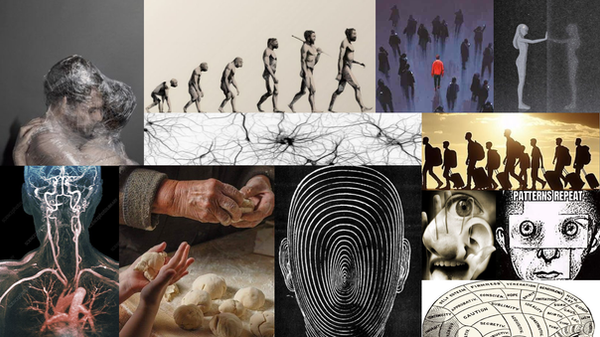
This one is quite broad, but that also means I get to explore a lot of different ideas. The idea of how human life is constructed, and how people are raised stuck out to me. There is so much to question in that sense; why do we behave the way we do? What if we were raised by another species? What if we weren't raised at all, and lived in total isolation? This idea really intrigues me. Our behaviours and actions are defined by our experiences and environment, not everybody has an equal chance at life. Another idea that stuck was perception, how the human mind works and how it can trick you to believe in things that simply are not true (in some cases as a method of coping). As someone who has struggled with hallucinations and delusions in the past, it would be interesting to explore it in more depth, not only to understand my own experiences more, but to apply it to my work in a way that can reach others.
Time


This is another extremely vague theme, with a lot to explore. There are a lot of sub-themes, the idea of eternity interested me the most, it is something the human mind cannot comprehend at all. You can think about it, but not process it. Some people may think of living forever as curse, some as a blessing. I think it would be quite interesting to research about the philosophical side of it. I also managed to get to the theme of life and how people are brought up. I would like to research about humans that have been raised in isolation or by other abnormal means, I think it would be interesting to explore this in depth, and to apply a unique idea to my work. The survival of wild animals and their freedom is also really interesting to me, the fact that we are subject to so many rules and a specific way of living, whilst they live freely and are not shamed. However, I struggle with using this theme as my ideas coming from it do not seem to correlate with the original word.
Afterlife
CHOSEN THEME


I have always had conflicting thoughts and opinions on what happens after death. it scares me to think about it, but it is also an extremely interesting topic. I have been raised in a Christian family with this topic floating around, yet never being fully discussed. There are many different beliefs, so there would be a lot to research about. I also find the concept that some people are exempt from going to hell, such as some who cannot sin as they cannot grasp the concept (e.g. little kids), really interesting. Exploring morals and religious rules would be interesting to see what it would take to evade all rules yet reach the same destination. I am also intrigued by the idea that heaven is a state of consciousness and mind instead of a physical place. However, this is also a topic that I would have to be careful about to not insult or be insensitive about towards people's belief systems.
Initial Research
What is the Afterlife?
afterlife, continued existence in some form after physiological death. The belief that some aspect of an individual survives after death—usually, the individual’s soul—is common to the great majority of the world’s religions. Of those religions that include belief in an afterlife, almost all subscribe to one of two versions: reincarnation (a continuous cycle of death and rebirth in new bodies or forms), or an eternal life, which will occur in either a heaven or a hell, depending on the individual in question.
Defined by "Britannica", the afterlife is a continued existence after your physical body has died, with usually your soul continuing it's life, as the soul is the most vital part of your stream of conciousness. In most religions, their belief of afterlife falls into 1 of 2 categories: reincarnation or eternal life.
Afterlife types in Religions
To understand peoples beliefs of what happens when we die, I decided to explore religions that have very different beliefs.
Christianity
Heaven, Hell, and Purgatory
In Christianity, their faith is built off of the idea of resurrection which is the idea of bringing something back to life; the idea being taken from Jesus rising from the dead and ascending to Heaven. Believers think that they can achieve the same if they are faithful to their beliefs and God.
Getting to Heaven is not so much as a physical journey to a certain place in the universe, but a spiritual ascension, a complete transformation of your body in order to live in God's dwelling.
Chinese Folk Religions
Taoism, Confucianism, Buddhism
3 Realms of Reality
There are 3 main religions/philosophies that are integrated into Chinese culture, with extremely similar ideologies and practices, all 3 are extremely important to Chinese culture known as "The Three Teachings". It is also believed to be extremely hard to properly explain these ideologies in English, but I will try my best to get my point across as I would also like to challenge myself.
"Tian" can be referred to as Heaven, but in a very different way to the commonly known Abrahamic religions. Out of the 3 Realms (Heaven, Human, and Spirit), Tian is the top world with 36 different layers, arranged on 6 levels with each of them containing different deities. In Chinese Folk Religion, it was thought that there were many sphere-like realms each different to one another, containing a variety of spirits like "huli jing" (fox spirit) or creatures resembling Chinese dragons. Different to Christianity, there is a specific area in the universe for Heaven, it is the highest universal principle. Heaven can also be personified as a creator that transcends this world, and communicates through nature and its movements.
When Taoists die they believe they can travel through and explore these realms or even become immortal, their bodies join the universe after death. These Heavens are incomprehensible to normal humans, the Xian (Taoist immortals) are reborn from their human spirits after being sent there. These spiritual versions could take on many forms, and even become mythical beings like dragons.
Death is not seen as something sad or happy, it is simply a phase of being. They are seen as phases in the same way as day and night are phases, they are companions not opposites. This is taken from the forces and idea of "Yin and Yang".
Hinduism
Reincarnation
In Hinduism, breath and the soul are related (even in the way the words are said), meaning breath is the core of a persons soul. Once you stop breathing, you are dead. When you are dying, you must be placed on the ground, and loved ones will perform rituals to make sure your soul moves along.
After death, the soul is covered in a vaporous structure. It is then taken to the God of Death for an identity check, and transported to the abode of the deceased. The identity check is important, you soul is predestined to have countless rebirths (also known as a Samsara), as well as having your own "balance sheet" which gives the exact length and form for each rebirth. This is based on your karma, your soul moves into another body. These bodies can range from plants, to animals, to parasites, and to humans.
To escape the endless cycle of reincarnation, you must reach "final emancipation", granting you and escape. To reach this release (known as Moksha), you must realise that the soul and absolute reality are one.
Atheism
Varied belief system, no belief in an afterlife
Atheists believe there is no higher being, and that there is no solid afterlife like every religion. It is hard to give a concrete answer as each person will have their own views. Some believe they should be rewarded for all the good things they have done, some believe they might reincarnate, some believe there is nothing: we came from nothing therefore we will return to nothing, it is the cessation of existence.
I relate to this one the most, I don't truly believe that there could be an afterlife, we will go back to how it was before we were born. This can be taken as something depressing, I had someone ask me "Does believing in that not make you depressed about life?" but I don't have anything else in my mind that would make sense. As much as I want to believe that there is somewhere better to go after we die, it doesn't seem realistic or logical to me. This doesn't mean that I have no morals, I think that we should be kind for the sake of being kind, not to get some sort of reward after this life.
Afterlife in Christianity
After looking through several types of beliefs and religions, I found the idea of Christianity to be the most interesting to me with a lot of research and text in English compared to the others. It is also the religion that I was raised with, so although I have some sort of knowledge on it, I want to expand it more after having some negative thoughts about the entire idea of the afterlife and Heaven. I decided to only research about the positives of the afterlife, being Heaven. This is because I am discussing a sensitive subject as is, and want to make it as digestible as I can.
Bodies in Heaven
"The flesh and blood cannot inherit the Kingdom of God"
The body, mind, and spirit live beyond the death of a human being, however there is an issue which is mentioned above. Our bodies that are created for life on earth cannot dwell in the kingdom of God, the existence of life after death is strictly spiritual. Contrary to some people's beliefs, we do not become a spirit or a ghost, you gain a whole new body that is specifically designs for your life in Heaven. You cannot age in Heaven either, which raises the question of what our bodies look like when we go there. Following some extracts from the Bible, here is what is known:
- The bodies are literal and physical, not spirit-like in appearance, as we are meant to look like God intended us to
- Similar to the body of Christ after resurrection, it can be seen and handled, yet could also pass through objects and disappear
- There will be a physical connection between the earthly and resurrected body, but our material identity (memory and personality) will change
- They will be divine bodies as they are given by God himself
- Angel-like
- Powerful, Immortal, and Incorruptible
- Is adapted to suit the new environment (in this case Heaven)
- Luminous
- Our identities are kept
This information is useful to me as it gives me a lot of ideas as to what kind of characters I could create in a heaven-like scene for an animation. Later on, I'll research some art that includes depictions of heavenly bodies/people to get a better grasp of what it would look like. Because the bodies are illuminated, I could experiment with some types of lighting and bloom in Blender to achieve this look, whilst also keeping the detail of the models.
Heaven's Environment
“And he carried me away in the Spirit to a mountain great and high, and showed me the Holy City, Jerusalem, coming down out of heaven from God. It shone with the glory of God, and its brilliance was like that of a very precious jewel, like a jasper, clear as crystal. It had a great, high wall with twelve gates, and with twelve angels at the gates. On the gates were written the names of the twelve tribes of Israel. There were three gates on the east, three on the north, three on the south and three on the west. The wall of the city had twelve foundations, and on them were the names of the twelve apostles of the Lamb” (Revelation 21:10-14).
From this description, we are told the general layout of Heaven, or at least the arrangement of it's gates and foundations. It can be interpreted in many ways. These are the 2 that popped into my head immediately when thinking about it:


These are 2 of many possible combinations, the only thing we are told is that there are 3 gates in each direction. Based off of this, it is safe to assume that the rest of Heaven's environment has very vague descriptions and everybody's interpretation of it will be different. To understand this further, I asked a few people to draw out the first idea that comes to mind when told "3 gates North, 3 gates East, 3 gates South, 3 gates West" These are the drawings that I got back:

_edited.jpg)
_edited.jpg)
_edited.jpg)
_edited.jpg)
_edited.jpg)
The majority of these drawings consist of 3 gates in a row for each direction. As this is the most common interpretation, I should probably do something like this if I were to model a heavenly scenery.
“The wall was made of jasper, and the city was pure gold, as clear as glass. The wall of the city was built on foundation stones inlaid with twelve precious stones: the first was jasper, the second sapphire, the third agate, the fourth emerald, the fifth onyx, the sixth carnelian, the seventh chrysolite, the eighth beryl, the ninth topaz, the tenth chrysoprase, the eleventh jacinth, the twelfth amethyst. The twelve gates were made of pearls — each gate from a single pearl! And the main street was pure gold, as clear as glass. I saw no temple in the city, for the Lord God Almighty and the Lamb are its temple. And the city has no need of sun or moon, for the glory of God illuminates the city, and the Lamb is its light”
(Revelation 21:18-23, NLT).
This passage gives me further insight in what Heaven is meant to look like, more specifically it's colours and decoration. A lot of it is made up of pure gold, with the 12 walls of the city being built with several gemstones, the gates being made of pearl. There will also be new colours that humans have never seen before, to which I had an idea for a scene. If I were to model an interpretation of Heaven, I thought it would be a good idea to make everything black and white since mortal humans cannot see the colours of Heaven. It would also challenge me on my skills with textures, as there would have to be a lot more detail if there is a lack of colour to it.
Heaven is a place, but not in the sense that it can be found on a map or somewhere specific in the universe. Reaching it isn't travel, so you are not going in a specific direction to get to it. Going to Heaven is a spiritual transformation, you are entering a completely new dimension of living. It is the perfect environment, an area to compensate for everybody's earthly lives.
Who gets to go to Heaven?
The only requirement to get to heaven is to repent for your sins and give your life to Christ. This can seem unfair if you compared 2 people's lives:
A - A person who attends church every Sunday, reads the Bible, and lives a calm life
B - A person who committed cold-blooded murder and lived as a criminal
A and B would both still be able to enter Heaven, as long as B repents and is genuinely sorry.
There is also the case of a person having absolutely no knowledge in God, the Bible, or Christianity as a whole. In this case, you are automatically allowed to enter Heaven as you have no knowledge of sin. I want to explore this idea even more, researching things like extreme isolation from other humans, and feral children that have been raised in abnormal means.
Angels
Heavenly Beings
Angels are pure spirit beings that are created by God. They are created to protect and act as messengers for God, as well as allowing people into Heaven. There is an order/choir of 9 angels from the highest rank to lowest. The way that we perceive angels has been severely altered since the beginning of renaissance art, giving child-like appearances to Cherubim or portraying them as attractive women with large wings. People also often praise or pray towards them, but this would be the last thing they want. I wanted to explore this further as I was interested in the sections of the hierarchy: their attributes, appearance, and duties.
Seraphim
Seraphim are the highest order of angels. The order is based off
of the angels closeness to God's throne, they are the
attendants and guardians before the throne, as well as
purification agents. They are made to serve and worship, and
were created completely sinless, yet cannot be compared to
holiness of God.
The name Seraphim is derived from a Hebrew word "sarap"
meaning the act of destroying something with fire.
The appearance of the 1st choir of angels is completely different
to how they are portrayed in most media, commonly saying "Do not be afraid" as the first reaction of seeing an angel of this sort is intense fear. All Seraphim have 6 wings, each pair having a reason:
Face:
By having a pair of wings on their heads, it represents reverence and awe for God, as well as being protected from His radiance. This proves the immense holiness of God, as even the highest ranking of angels must cover themselves in His presence.
Flying:
To swiftly aid.
Feet:
A pair of wings are at their feet to humbly conceal their unworthiness in God's divine presence.

Cherubim

These angels are the 2nd highest in the choir, they are the
guardians of God's glory, and represent his power and mobility.
Their main role is to guard holy places. This is an extremely
important job and requires a lot of trust. They have an intimate
knowledge of God, and are therefore eligible for such an
important task. They guard the place where God dwells, and the
overlaps between heaven and earth. They also block the
entrance to Eden, a place where God and humanity once
dwelled as one. Another role given to them is being the celestial
attendants in the apocalypse.
In terms of appearance, they are described to have a human-like appearance with animal-like features. They are also usually double-winged.
Thrones

These angels are probably the scariest to most people as it is
the complete opposite of what you'd expect an angel to look
like, made of many interconnecting wheels containing eyes and
filled with light to reflect God's wisdom. Being the lowest of the
1st choir, they represent humility,
peace, and submission.
They are insanely wise beings, they are regularly contemplating
God's will, but this is only to truly understand and apply God's
ideas into practicality. Thrones also represent mercy and justice by balancing truth with love just like God does, whilst also enforcing His law so that the cosmos are working in harmony as He intended for the universe. The cosmos is also where they reside, being where material form begins to take shape.
Angels who are lower in rank to Thrones require them to reach God personally. They also explain the divine wisdom behind the missions assigned to the lower choir angels that are given by God. In some occasions they do interact with humans, behaving as God's messengers to explain his will to people asking for guidance, explaining God's perspective on issues they may have.
Dominions

The lower down the choir we go, the more human-like the
angels start to appear. Dominions are the angels of leadership,
regulating duties of all angels ranked below acting like
managers. However unlike Thrones, they do not explain the
wisdom behind the duties as they do not have the knowledge
for it.
In the past they have destroyed ancient cities full of sin, helping
the righteous people escape, they keep the world in proper
order.
Dominions are also channels for God's love and mercy, answering prayers of the leaders of the Earth. They send insights for people to learn from their mistakes, whilst still reassuring them that they can move forwards due to God's forgiveness and mercy.
Their appearance is that of divinely beautiful human beings with 2 feathered wings, usually wielding orbs of light at the top of their sceptres or at the base of their swords.
Virtues

Representing courage, grace, and valour, Virtues are spirits of
motion holding raw power over the physical universe and control
miracles. These angels control and govern all aspects of nature:
- Seasons
- Stars
- The Moon
- The Sun
- All Elements
Even though they hold power over all of this, they still must stick
to the natural laws of the universe as they cannot be disturbed,
this role is strictly reserved for God only. Virtues also support sinners who want to correct their wrongs.
The description of Virtues is probably the most specific one out of the entire choir:
- Blueish dress
- Golden belt
- A large circle of gold surrounding their heads
- A bright star on their foreheads
- Shaped like sparks of light
I think that drawing Virtues would be quite interesting as I could get to experiment with form and shape due to their description of being "shaped like sparks of light". I could try to take images of sparks and draw over them for poses and silhouettes.
Powers

Powers are warrior angels given the task to defend the cosmos
and humans against evil, holding one of the most dangerous
tasks.
These angels fight evil spirits who try to start chaos through
human beings, whilst also protecting anything from being
overthrown by Satan. They also oversee the distribution of
power amongst humans, whilst also introducing man to higher
mysteries.
Similar to other angels, Powers ensure the cosmos stay in order by managing the movement of angels. Based on the fact that there are 3 whole ranks tasked with managing the movement and tasks of angels we can only start to think of how important they truly are to keeping the cosmos going, or who complicated their system is.
They have no official description for their appearance, however they are assumed to wear armour and wield weapons to fight evil, and are usually presented as such in art.
Principalities

The principality angels are guardians of nations and people,
being assigned "purity of intention". This phrase isn't explained,
but I assume it means something along the lines of the intention
behind their actions being pure with no underlying meaning.
The 2 choirs, Powers and Principalities, are ruled over by Jesus
Christ in both the spirit and earthly realm. They are assigned to
care and rule over the universe, also teaching people to honour
their rulers.
In their higher functions, they only seek the honour and interest
of God.
Just like Powers there is no official appearance description, but they can be assumed to look powerful and leader-like.
Archangels

Taken to mean "leading angel", Archangels are the most
frequently mention rank in the Bible. They are God's
messengers for people during crisis or salvation.
According to the Bible, it is believed that there are only 7
Archangels, with only 3 names mentioned in scripture:
- St. Michael, "Prince of the Heavenly Host" (the only one that
is referred to as archangel.
- St. Gabriel, "The Messenger of the Incarnation"
- St. Raphael, "The Angel of Healing and of Medicine"
All 7 of them are referred to as "the seven assisting spirits around the throne of God" and had a special place in God's plan from the very beginning.
They usually have large wings of around 2-3 pairs and appear human-like, St. Michael is described in detail having: a set of armour, a spear or a sword, and sometimes carries a pair of scales which represents his role in the last judgement.
There can also be a lot of confusion to do with Archangels, if they are such low ranking angels, why is there such few of them? Why are they so important? It is, again, important to remember that the ranking of the choir of angels is not a rank of their strength and importance, but their closeness to God's throne. Archangels work closely with humans, making them extremely important, yet low ranking.
Angel Colour Rays
Whilst researching, I stumbled across an ideology to do with Archangels. The angel colour rays are a system of angel colours based on 7 light rays, each representing an Archangel. Some believe that the colour rays are at different energy frequencies, leading to the attraction of the corresponding angels. Others view it as a fun way of symbolising the Archangels and their missions.
Blue: Michael, "Leader of all Angels" representing strength, faith, and protection.
Yellow: "Angel of Beautiful Thoughts" representing wisdom in decision making.
Pink: "Angel of Peaceful Relationships" representing peace and love.
White: Gabriel, "The Angel of Revelation" representing the purity and harmony of holiness.
Green: Raphael, "The Angel of Healing" representing prosperity and healing.
Red: "The Angel of Wisdom" representing wise service.
Purple: "The Angel of Mercy" representing transformation and mercy.
I think it would be interesting to explore these further and see how their ideologies link to the research about colour theory that we have today, such as the feelings they evoke. It could also be a chance for me to experiment with lighting in Blender, creating light rays in scenes to show this ideology.
Based on biblical angels, I've managed to get quite a few ideas for both my project and for more research. Some questions popped up into my head about how morals and sin work in Christianity and how it would be applied to the few that are allowed into heaven regardless. Later on, It would be useful for me to research things like feral children and people who grew up in isolation, they have not heard of God or anything related to religion at all. How would this affect their chances? It's something that is really interesting to me, not only for the sake of religion, but just to see how different we could be if we aren't raised in the way most people are: surrounded by people/family and taught how to live and do certain things in a certain way.
The hierarchy/choir of angels was also something really interesting for me to research, I knew there were different types but I never knew they had specific roles or what they could look like. This was extremely helpful, I think after researching about this I will definitely want to include angels into my project in one way or another, even if it is just being inspired by their appearances, missions, or behaviour. If I were to include angels, I would also have to include Heaven or something adjacent to a divine place like it. There isn't much of a description, so I will probably take very slight inspiration from it and go my own way, being inspired by real life buildings, churches, and cathedrals as they are a holy place for Christians.
Afterlife & Angels in Media
To further my understanding in how angels and the afterlife are perceived, I decided to do a little bit of research on some media that have these themes in them, showing how differently it can be shown.
Neon Genesis Evangelion
Evangelion - Angels
The way that angels are depicted in Neon Genesis Evangelion is quite different from most media. In the show, anything referred to as an "angel" is one of the children of Adam: a seed brought to inhabit the Earth, yet collided with the Lilith seed (carrying "Lilin" a.k.a humans). This lead to humans battling the angels to save themselves from death.
Throughout the show, they fight a total of 16 angels (Adam, and his 15 children). They are named after angels in Christianity and Judaism. The angels are trying to reclaim Earth from the Lilin by attempting to cause the third impact (an event that causes all humans to merge into a singular life form).
The depictions of the angels in this show are extremely interesting to me so I wanted to look deeper into their designs.
Ramiel

The 5th angel, it is large and powerful. Compared to the previous angels, it has an extremely different form with no humanoid features making it hard to believe he is a living being.
It first appears as a reflective, blue crystal octahedron with a high pitched choral voice. However, as it readies up it's attack, it transforms and screeches loudly.
Even though the design is simple, I think it is really interesting how the design team portrayed different angels and made Ramiel so different to the previous ones. I want to take this idea into my project by making simple character designs whilst also making them recognisable and distinguished.
Arael

Arael is the 15th angel. Positioned above Earth with an extreme range it was one of the most dangerous angels.
He is presented as a jagged-winged bird-like creature that has extremely intense light. This sounds quite familiar to the angel research from the Bible that I did prior to this. The depictions become more accurate further into the show, presenting angels with luminosity and pairs of wings. It also attacks psychologically, causing intense distress to one of the pilots Asuka. It is the complete opposite of how an angel should behave.
I'd like to take this idea into my project too by exploring the goodness of angels through my designs and how I present my characters.
Neon Genesis Evangelion presents angels in a light that many people do not think of them as. It raised some questions for me such as: How would angels react if their space was invaded by humans? Can they truly commit no evil? It would be interesting to have angels in my project that behave differently to the ones presented in the Bible, questioning their different aspects. I think it would be cool to have angels shown in a more human-like personality so that the viewers resonate with my final piece more.
However, I would also have to consider the morality of this and be careful to not upset people who are Christian, to make sure I don't do something offensive I will ask a few Christians that I know as I go on with my work to make sure it is okay.
End of Evangelion - Afterlife
This movie is the real acts of what happened in the final few episodes of the show Neon Genesis Evangelion.
To achieve Human Instrumentality, the Spear of Longinus was meant to be used on Lilith. However this was used as a final line of defence against an angel, so SEELE (the organisation) requested for Unit-01 to be used instead. However, Gendo refused to
this, his whole reason to doing Human Instrumentality was to preserve his wife's soul and to reunite with her once again. Instead they used Rei, his wife's partial clone.
Human Instrumentality is the act of joining all of Lilins (humans) join together into one being, and abstract existence of being whole. During the 3rd Impact, their bodies dissolve into LCL (an orange liquid, also used to conduct pilots and Evas together) as their souls are liberated. During Human Instrumentality, your soul is able to reject the idea and return to the real world. I find this extremely interesting, exploring the idea that you have the choice of if you want to die or to keep living is a cool topic, I haven't heard anything like it before. I want my project to explore the afterlife as something abstract yet taken from real life beliefs so that it can still relate to people's ideologies.
Preacher's Daughter - Ethel Cain

This album takes you on a haunting journey through a
teenage girl in a small, southern town, processing her
religious trauma and growing up. It is extremely
intricate with it's storytelling filled with southern
gothic aspects, religion, and spirituality. Considering
this is a debut album, it is truly impressive.
Ethel Cain is the artists persona, embodying how her
"bad ending" would've been like. The surname Cain
is probably in reference to the 9th circle of hell
"Caina" which is an area for people who have
betrayed their family, as it relates to her story.
Track 1: Family Tree (Intro)
The opening track sets up the world of Ethel Cain, set in 1991. The beginning of the song starts with a deep, fuzzy atmosphere and an echoing voice, presumably a preacher in a church, her father. A simple opening line is said, "these crosses all over my body, remind me of who I used to be, and Christ forgive these bones I’ve been hiding from no one successfully" immediately setting the tone of Christianity and how intense it tends to be in southern American towns, as well as the horror aspects of the album. The entire song is filled with creepy lyrics, foreshadowing the entire album and it's elements. She discusses how she will always be connected to her family, even though she desperately wants to rid herself of her trauma. We usually see religion in a positive light, so I think it's important to understand the tragic sides too, especially people who have been hurt by religion and their experiences with it. Although Christianity is meant to be all about love and acceptance, people can take this and skew it into something that benefits them yet hurts others, following culture rather than religion whilst trying to disguise it.
Track 2: American Teenager
The mood immediately changes, and we are taken to a song that sounds quite pop-like with upbeat riffs and a catchy sound. It seems positive in its sound, which makes it easy to not pay attention to the lyrics, only catching onto buzzwords like "bleachers" and "high school football" that show off the stereotypical American experience. On surface level, it may seem that Ethel is singing about her own experiences, however it is the opposite.
She is frustrated over the fact that she can't experience a stereotypical American teenage life, and glamourizes it. She wants to live this life as it was promised to many American's, yet it is impossible for Ethel due to the expectations given to her because of her family being so intensely invested in their religion. She begins to question her religion, and her relationship with God and religion is starting to fade. She is asking questions consistently throughout the song, her faith is disappearing and she is turning to alcohol as an escape.
Track 3: A House in Nebraska
This long ballad of echoing harmonies carries you through Ethel's first heartbreak, about a boy that left town before the beginning of the album's story. The yearning is extremely obvious in the way she presents her voice. She imagines them living together in an abandoned house in the town she doesn't like, her loneliness is suffocating her.
Track 4 & 5: Western Nights & Family Tree
These songs begin to bring to light the themes of abuse and violence into the album as she is attempting to move on from the previous heartbreak. It is not clear if Ethel was truly in love with the man she speaks about, it seems to just be an attachment since he is her only escape from the life she no longer wants, so she will stay no matter how damaging it is. She is promising to stay in this relationship for the sake of escaping. She is completely devoted, which will come back to bite her in the back.
Track 6: Hard Times
Soft and filled with gospel aspects, this song goes into the abuse that she had received from her father throughout her childhood, it lets her explore and confront these feelings. She can't seem to get rid of the guilt and pain she feels even though it wasn't her fault. To me, this is probably due to the position her father holds: a preacher is like a pillar for a community, he is meant to be kind and caring, so she questions what she has done wrong to deserve such treatment or how he was even able to do such things to her. Losing her faith, she runs away leaves the area where she lived her life in pain.
This abuse is reflecting in her romantic relationships with the men that are sung about, she tends to stray into relationships that hurt her because it is what she's used to from her childhood. Led to believe this is what love is meant to be like, she struggles to leave when her partners hurt her.
Track 7 & 8: Thoroughfare & Gibson Girl
Once again, Ethel meets a new lover, this time by the name of Isaiah having hopes because “...for the first time since I was a child, I could see a man who wasn’t angry”. I found out something interesting about him: in the Bible, Isaiah speaks against the leaders of Jerusalem, telling them that rebelling again God will come at a cost. This foreshadows the events about to happen as this is the major decision she makes after officially leaving her town and religion.
They both search for the meaning of their lives, living in several motels and exploring. They're in a honeymoon phase until the abuse begins. He begins to drug her and sell her off to prostitution for money, but gaslights her into believing that it was of her own will and she feels a rush of euphoria from it.
Track 9: Ptolemaea
This track is my favourite, it goes through so many emotions and encapsulates a lot of feelings into one song. It is heart breaking to know that she devoted her life to Jesus and her religion, yet he wasn't there to save her in her most crucial moments, dying in an extremely horrifying way. Just before Isaiah is about to eat her a line is said, "You love blood too much / But not like I do." Ethel likes blood in terms of the purity of Jesus' blood, whilst Isaiah loves it because he likes the pleasure of taking Ethel's life away. Before cannibalising her, she is drugged meaning she is experiencing intense hallucinations throughout this.
In the beginning, the song is creepy, slow, and distorted showing how her hallucinations are affecting her. As she explores her feelings, and after asking him to stop the track comes to a climax, then screaming it out loud. After this the track becomes haunting, a voice slowly and under pain moaning out "I am the face of love’s rage", whilst the instrumentals begin to rage, coming together to sort of an organised chaos. It cuts between silence, the whole entire song is a piece of art. It embodies feminine rage and pain, putting into a horrifying piece instead of the usual calm/moody way that it is portrayed in other media.
Track 10: August Underground
Straight after a loud and chaotic song comes a tranquil yet creepy instrumental. This song is representing the slow and painful death Ethel is going through. The groans, aching voices, and disturbing instrumentals give us just a slight feeling of what she can be going through. She losing consciousness, this daunting song is showing that the world of Ethel is coming to an end. It is quiet yet aggressive.
Track 11: Televangelism
In comparison to the other instrumental, this one is calm and ambient. It represents her body ascending to Heaven rather than the act of her being killed instead. If you were to listen to this song on its own, it would be calming and beautiful. However because you are experiencing it after such a daunting story, it's almost disturbing, yet you feel a sense of relief. She finally gets to live in peace, she is free from all her worries and pain. It's believed that some of the off-key notes are meant to represent her synapses shutting down as she's dying.
The song is also interrupted by a tape warning, meaning that the murder is probably being recorded, giving her hope for justice in the future.
Track 12 & 13: Sun Bleached Flies & Stranger
She begins to make peace with her life and experiences, reminiscing all the way back to the trauma she experienced from the church. She consistently repeats positive affirmations to both herself and the viewers who just experienced her whole traumatising story in one go. She begins to recover her faith and relationship with God, she wants peace with her life and death.
The album comes to a close of Ethel saying goodbye and confronting what Isaiah has done to her. It goes straight back to the haunting themes and sounds of the rest of the album, she still worries about his feelings over her own, continuously asking "Am I making you feel sick?". He betrayed her trust in the worst way possible. She can't find peace, and she can never get rid of the burden on her shoulders, but she can only try her best. The album ends on a gruesome note, delivering the artist's message perfectly.
This entire album is pure art, exploring deep and complex themes in a daunting way. It isn't very digestible, but it is a journey that you go through. I want to take inspiration from this album, and it's more sad songs, for a background track and voice overs on my final piece. I want it to be raw and emotional, yet easy to digest. This can be done in a number of ways in my opinion and will take some thinking/experimentation to properly execute. I will probably have to experiment with making my own music for my final piece, which I believe will be useful yet difficult since I am not talented in anything to do with music. I have a few people that I could ask for help, but I need to make sure that it doesn't overtake the rest of my work load, so I will probably keep this for the end.
I think it would be interesting to explore the ideas of how religion can affect people, even in the bad ways. In this albums case, it is not so much the religion that affected her but the culture surrounding Christianity in southern America. The buildings in these areas would be cool to research since they tend to be different to other churches.
Genshin Impact
Hilichurls
Hilichurls are monsters that were once human beings,
cursed to this life by the Gods for "sinning". During the
Cataclysm (the destruction of an ancient civilisation who had
no God to rule over it unlike the others), the ones who were
not pure-blooded got turned into these monsters. This puts
into perspective how strict some rules of religion are, this is
something that was not in their control at all, yet they still
have to suffer due to their ancestors actions. It
furthers my questions of how someone who knows
nothing of religion or doesn't do things of their
own will, and how it affects their path to the afterlife.
They are stuck with a curse that they had no control over getting, they did not commit something of their own free will. They still understand that they were once human, leading them to wearing masks because they are so horrified to catching glimpses of their new faces.

Columbina

Columbina is an angelic character that seems to be cold
and dismissive, there isn't much known about her. Her
design is very reminiscent of a Seraphim angel, including
3 pairs of wings on her head.
The fabric covering her face is also taken from the fact
that Seraphim hide their eyes away from the blinding
light of God. Considering she is serving her God/Archon
and that she is taken to be an extremely strong person,
she seems to be very close to the Archon. It is safe to
assume that she works by her God's side.
This is the kind of design that I am inspired by when I think of recreating divine beings from the Bible into representative characters. It is simple, yet takes intense inspiration from the Biblical version, reflecting in both her character, personality, and story design.
Celestia - Residence of the Gods
Even though there isn't much information about this area in the game, it is mentioned quite a few times and will be useful for me to understand the varying forms of afterlife, in this case being ascension to Godhood.
Celestia is the area of the Gods and where they reside, only people who have received vision and committed great feats can have a chance at ascending to Celestia and becoming a God. Those who have ascended are still beneath the Celestial Gods, and are not seen as equals. The area is currently controlled by the Heavenly Principles (a divine being who is believed to be the first God of the world.)
Each Archon has a thing called a Gnosis that links them to Celestia and shows that the Heavenly Principles have control over the world and its laws. It also helps them communicate and resonate with the area and its Gods. This is also something I would like to take in, I want my project to explore the ideas of how people get to Heaven or other divine places. This is the first time I had heard of something physical to connect with the divine, and I would like to include this type of connection with the afterlife. It is placed inside of the body but I am not sure where I would put something like this, inside or outside of the body.
In various types of media the way that heavenly/divine beings are presented is so drastically different from one another. This gives me quite a bit of leeway to experiment with what I myself believe in and how I interpret these beings. Up until now I didn't really have much of a solid idea of what I want to do, but I think I have a few things coming to me. I know that I want to show my interpretation of a heaven-like area and its angels or divine beings. I think I will still do a bit more research on religion and maybe even more on angels but this time specifically on the ones portrayed in art and how the form and visual aspects affect their representation so I can apply/reference it to my own.
Because I find the idea of people who have no idea about religion (even as a concept) and how they're thought to experience the afterlife interesting, I think I will base my project off of that. It's quite broad so I still have some room to experiment, but it will also lead me into a proper direction so that I know what I'm doing and will not research things that will not apply to my final piece.
Survey on Afterlife
Understanding other peoples' views on the afterlife is extremely important for my project. To further my understanding on these views I created a survey for people to fill out; I posted this on the religion subreddit and stuck QR codes around the college building. I managed to get around 45 responses which is really good.
Question 1: What is your religious belief?


Original Survey

Relabelled
To begin I wanted to collect information about peoples religious beliefs. Not only does this help me understand the percentages and which religions are more widely practiced, but will also help further on to make links and connections of how their religious beliefs affect other morals and opinions. Christianity and Atheism were the most popular, with Judaism and Islam coming after. This means that my project will reach a lot of people since it is based on Christian beliefs. I did get a comment saying that I should've added more options. Although I did this to confirm the statistics of there being mainly Christians and Muslims in the UK, I do agree that I probably should've added a lot more options to choose from. Because of this, I decided to recalculate it onto a different pie chart for an easier understanding of the numbers.
Question 2: What do you believe happens after we die?

I then asked what they believe happens after we die. Every Christian responded with the belief in heaven. There were some other interesting thoughts on heaven too: two people believed that you reincarnate and then ascend to heaven, another believed that we stay on Earth which then becomes a heaven of some sort. There were some people who believed in everything, more specifically there was one person who answered with something that was interesting to me. They said that everyone goes to the afterlife that their God's have prepared for them, and that there is a meeting place between religions to meet friends and family. I think this is a beautiful belief as it includes everyone and allows everybody to live happily and in their own way. Some believe nothing happens, and others are confused and don't know what will happen. Each person can have their own specific set of beliefs in what happens, but the majority believe that there is some sort of afterlife.
Question 3: Is there a particular reason you believe in this?
To further my understanding, I wanted to know why people have these beliefs. Some said they don't have a reason, and that they believe in it just because. Many religious people continue to practice and believe because of their religious texts or because they were raised this way and don't think anything else is correct. Many people who don't believe in an afterlife say that there is no concrete evidence that an afterlife exists saying that they can't see anything past this life, or that people die and it is a natural way of life. There was another interesting answer that I got from this:

I think this is an interesting and a good explanation to verify that an afterlife exists without mentioning religious texts and solely focusing on things that we experience in our lives. Before, I never really thought that there is an afterlife, that everything goes back to how it was before we were born. But I think this shifted my perspective a little, it was explained easily and written well.
Question 4: Does the idea of death scare you?
1 - No , 10 - Yes

People who believed in an afterlife or had a
religious belief were more likely to answer
towards not being scared of death. This shows
that if you believe there is something that can
happen after death, you will not be as scared as
your consciousness will still exist in some way,
just not on this Earth. I think there is still a fear of
death for other reasons being not seeing people
you love and know, or the fear that your death
is painful. I will try to touch on this again later on
to understand why people are scared of death.
Question 5: If you are comfortable with sharing, have you experienced the death of a loved one? What was your/your family's reaction to this? How did you cope with it?
This was a very personal question so I left it optional and tried to approach it in a kind manner as to not seem insensitive. This question helped me grasp how people reacted to the death of their loved ones, I couldn't comment on this as it hasn't happened to me and needed some first hand experiences. Almost all of the people who replied spoke about relatives who were older than them, feeling bad that they didn't speak to them as much as they wanted and feeling empathetic towards their deceased relative's life experiences sharing that some had regrets in life.
The reactions to a relative dying were: being quiet and reserved, crying, shock, grief taking a while to kick in, difficulty doing daily tasks like sleeping, and described the feeling of a loved one dying as "heavy chested". Since everybody reacts to the death of someone they knew differently (which could be due to a variety of factors such as their closeness), they also cope in a large range of ways some being:
- Visiting graves
- Using the opportunity to reflect and share stories of their lives to ease the pain
- Family supporting each other no matter what their relationships are like
- Not talking about it
- Distraction from the event
- Honouring them with a funeral service
- Religious practices to honour the dead
- Therapy
Most importantly, the topic of the afterlife popped up as I had expected, and quite often too. Many people said that they believe their loved ones are in the afterlife with others, enjoying their time; or that they feel comfortable with the fact because they know that this life is temporary, and we will return to God anyway. To me personally, the belief in afterlife comes from exactly this, the coping of people passing away. It is scary to think that after we die nothing happens, that there is nothing after and that we are insignificant in the grand scheme of things.
Question 6: Assisted suicide is the act of deliberately ending a person's life in order to end suffering (this could be for the case of being terminally ill, or having a permanent debilitating condition). Do you believe this should be allowed?

This was a question that I was interested in seeing peoples' opinions about. Assisted suicide has always been a controversial subject, some believe that you absolutely shouldn't be able to do such a thing (whether it's due to religious beliefs or not) because life is precious and shouldn't be ended over a difficult situation. Others think its okay, people should have to choice to decide if they want to live or not, at the end of the day we didn't have a choice of whether we wanted to be born or not. I think some people have a negative view on it due to not having such a strong condition that causes you to even consider assisted suicide as an option, therefore having a very biased opinion on it. Although it was interesting to see people's opinions on this matter, I believe that only people who have been through extreme illnesses or have debilitating conditions can truly comment on what is right or wrong.
One person left a comment saying that they disapprove of assisted suicide because it's against their religion, but believe that their religion shouldn't be in charge of what's legal and what isn't. This is a good point to make, a few laws are set on the basis of religion and not other factors (such as the abortion laws in the U.S.), it is important for us to encompass all beliefs when taking these things into consideration, but also leave it as a choice for the person themselves. Another person commented that with dementia it is better for them to die whilst still having memories and being around those you still love and know, because it's horrible to slowly forget those around you and then forget yourself. I believe this is a valid point, and again should be under the control of the person affected.
Doing this survey has helped me gain insight on what people believe in, what their thoughts are, and seeing the numbers of people who believe in certain religions or things. I found it really interesting to see people's responses and the kind of feedback they have given me. This is going to help a lot to understand who my audience is, but also to influence my work and the direction that this project is going towards. Going forward, I am going to reflect on these answers whilst coming up with ideas and the final plan for my final piece.
further research
Why do we believe in religion?
Something that I have thought about throughout the process of my research is why do humans believe in religion? So many pieces of media tend to circle around the idea of some kind of higher power, an afterlife, or spirits. Some people might say that its obvious, some might not believe in religion at all, but there is a reason to both sides.
Society
Many people believe that as humans in societies, we must have religion to keep us in order. Religions exist for this reason: we have a tendency to question everything about us and around us, if something we don't understand happens it is much easy to blame it on a divine entity. It is natural for us to want to believe in something that is larger and more powerful than us, we are scared of being the only planet to have existing life and therefore search for this in other ways. It also helps to stabilise society, having many people conform to one ideology is much easier to handle and control than for everyone to have several types of belief.
The belief of religions has also been around for around 100,000 years, people are more comfortable believing in something that has been believed and practiced by their ancestors. It is only natural to conform to something that has been around for so many years with no question.
Death
Most people are scared of death, that is a well known fact. We can be scared of the fact we will no longer exist, no memories of us will exist, and we will be forgotten. We, as humans, need to feel secure and believe that we must have some kind of significance if we are alive. We are scared of the unknown, and are future oriented beings, therefore there must be some kind of belief system that lets us believe in a higher being or an afterlife to lower this anxiety.
Humans questions things all the time, our brain is an answer-seeking machine. Science tends to answer a lot of our questions, however there are some things we question that have no evidence or reason, which in turn makes us seek "answers" in another way: this being religion.
Culture
Many, if not most, people tend to believe in the religion that their parents do. Some don't even have a chance to look at other religions to see where their beliefs lie because of this.
In some rare cases, religion is deeply integrated into their cultures. They might feel pressured to stay in and practice something they might not truly believe in, only for the sake of being welcomed into their family and communal spaces. This reason is also where religious trauma can stem from, you must confine to a set of rules which can range between extremely strict to very lenient.
Fear of Punishment
Something that I don't think is discussed fully is the fear that people have of being punished in the afterlife because of the actions that they commit on Earth. You can often hear people say that they "don't want to go to hell" if asked why they believe in a God or because of the morals they hold. By focusing on just Christianity, we are taught to fear God and respect Him so that we are welcomed into his realm and not thrown into a life of eternal suffering. I never truly understood this as He is described as all-loving, so why would he throw his own creations into a world of suffering and punishment? I can understand that this isn't too harmful as it makes people behave and keep out of trouble, but it can also reinforce the idea that you should only do good because you are rewarded for it, not just out of the kindness of your heart.
Religious Psychosis
Naturally, this can lead us to another question - What can happen to people who get extremely invested into their religion and spirituality? In extreme cases, this can lead to something by the name of "religious psychosis" (or sometimes referred to as religious delusions).
"A person with religious delusions may feel sure that a religious figure or deity is speaking to them or that they themselves embody a religious figure."
This can manifest in different ways, from believing that demonic beings are out to get them to believing they are a God or divine being. It is also known that people who participate in religious practices are more likely to get these delusions, especially if they already have a mental illness that gives symptoms of psychosis e.g. schizophrenia. My own opinion on this matter might seem controversial, but I don't mean any harm by it: if it is considered to be delusion now, why was it not before? Why could there only be people who can communicate with divine beings years and years ago, why are they considered insane today? It's not something that's asked much, but it also seems disrespectful to ask due to peoples beliefs and being wary of not offending anyone.
Although I haven't experienced this personally, I have consistently questioned: if there is a God, why must he punish me so much? Experiencing so much difficulties and hurt is already a lot to handle for most people, thinking that there is a divine being that is all-knowing and all-loving that isn't helping us in our most crucial times of need makes everything feel so much worse. Why do some people experience such good lives, but others are punished for nothing?
Extreme Isolation in Humans
As previously mentioned, I want my project to explore the themes of how afterlife is experienced for someone who hasn't heard of God or religion at all. This is quite difficult as religion surrounds us and is pretty much everywhere you go, we are taught about it from a young age. For an ordinary person, it is impossible to not know of religion. To achieve the idea of not knowing of it, you would have to be extremely isolated.
Feral Children
Many cases of extreme social isolation are of children who have been raised in isolation from other humans by animals. I will be researching this to get a more broad understanding.
Marcos Rodriguez Pantoja
Marcos was a child that grew up in a forest for 12 years after being abandoned at 7 years old. To understand how to survive on his own, he studied the moves of animals by following them, and tried to replicate the actions of the shepherd who had abandoned him: how to catch rabbits, how to catch fish, even hunting.
The entire time, he was raised by wolves who protected and sheltered him. He also ended up befriending snakes and foxes, whilst also making enemies with wild boars. He lost the understanding of his language (in terms of speaking, he could still partially understand if it was spoken to him) and resulted to communicate in barking, howling, and screeching.
When he was found, he was wrapped in deerskin (presumably from hunting), and had long, matted hair. This description of both his communication style and appearance helps me begin to understand how humans would behave if they were wild animals. He was described as scruffy and wild, but also clever and curious.
After being found, he was taken to a convent to receive education from nuns for a little bit over a year. He had no idea of the many social cues and happenings that normal people would experience on a day to day basis; even after 50 years he hasn't adjusted, daily interactions are just a bunch of invisible signals that we catch onto whilst growing up. This also shows that understanding and acting out body language is important to show how someone might feel. It's something that I will have to look at to understand how to show the viewer about emotions and characteristics.
Oxana Malaya
Oxana was locked outside of her house by her parents at 3 years old which lead her to go towards the dog kennels in search for shelter. She ended up spending 5 years here.
She lived with a pack of stray dogs, picking up canine behaviours: sleeping on the floor, barking, crawling on all fours, licking herself clean, eating raw meat & scraps, and eating without her hands. As she had spent so much time with the dogs during her crucial years of development, these actions were ingrained into her, and even now at 40 years old she is beyond return to live a normal human life; her brain capacity stuck at that of a 6 year old.
She also lost the ability to communicate because of this. When she was found, it was only due to the fact that her neighbours had seen her bark and them. When trying to remove Oxana from the kennel, the dogs were extremely protective of her and refused to let her go. The only method authorities could use was to lure the dogs away with food. It's also safe to assume that she had worn the same clothes the entire time, ending up with them being ragged and dirty.
Researching this helped me understand how protective dogs and wolves can be over their packs, even if it is a human, as well as how their behaviours can be learnt by young, impressionable children.
Andrei Tolstyk
There isn't much information about this case, but I assume that is because services are trying to migrate him into a normal life. This case is a bit different to the others as he was raised by 1 dog instead of an entire pack. He, as have the others, adopted dog-like traits like walking on all fours, biting people, and sniffing his food before eating it.
There are many common traits between all 3 cases: they are a result of abusive and neglectful parents, have lost communication skills, act "wild because of the taught animal behaviours, and have struggled to rehabilitate into modern society as those years were crucial for their development in all aspects. This has been quite useful for me and is setting me into a direction that I think I want to go into. The majority of feral children cases are either due to being isolated from people completely, or being raised by animals (most commonly wolves/dogs), so this is probably what I should stick with as it has the most information and coverage. For my visual research, I will have to look at character designs and clothing that is made from natural resources.
Sentinelese Tribe

The Sentinelese tribe is a group of people living on the North Sentinel Island of the Andaman Islands of India.
This tribe is the most isolated group of people in the world, resisting almost all outside contact, killing any outsiders that try to approach after given a warning. Attempting contact is not only dangerous for our lives by having the risk of being killed, but also dangerous to them as they are exposed to modern diseases and bacteria that has the potential of wiping them out completely.
They are thought to live in 3 groups, building large communal huts that can house several families at once, as well as temporary shelter that can be found on the beach; which is probably used for those who are fishing or catching crabs. In addition to fishing, they also hunt and gather in the rainforest. They are thought to consume all sorts of foods but mostly: fish, crabs, fruit, tubers, eggs from turtles and seagulls, birds, and wild pigs; cooking their food on the campfires kept near their homes.
As for appearance, women and men wear different things.
Women
Men
Fibre strings around their waists, necks and heads.
Necklaces and headbands, as well as a waist belt that is thicker than the womens.
They also carry spears, bows, and arrows. There can be misconceptions that their way of living is like the stone age, but in reality they use washed up iron supposedly from shipwrecks for their arrows.
To honour the dead, it is thought that they place skeletons in a sitting positions underneath the buttressed roots of trees (based on sightings).
This was really interesting for me to read about, and will be really helpful for my final piece. I can see how humans would behave if they were not part of how modern society is, acting on just their primal instincts. It also gives me an insight on what kind of diet they're on, and how they make use of the materials around them for weaponry, clothing, and food. However, this is just one region in the world, so the resources a person would use is dependant on the biome and location which is something I might have a look at to decide properly. I have a few ideas now on what media to research for my artist and visual research to make sure my time is spent efficiently and it can actually impact my work.
Wolves and Their Behaviours
Based on my research of feral children, most cases consisted of the child being taken care of by wolves or dogs. As they are part of the same species, each being sub-species, and share extremely similar DNA; I decided to research wolves as they are more wild and relevant to what I am leaning towards. Wolves are also represented in the Bible as pure evil because they hunt the sheep who live faithfully.
Food & Hunting
Collaboration and intelligence is the main focus during hunting as they lack the size, weapons or power. Because of how the relationships between the pack work, some wolves have specific roles in hunting: females are faster due to their slimmer bodies so they run ahead and confuse the prey, males are stronger so they wait for the prey to be slowed down and attack. They single 1 of the prey out and surround them so they have nowhere else to go. They usually observe and choose the sick and/or malnourished prey, this does good for both the wolves and the prey. The wolves get to eat, and the herd of prey no longer have the risk of being wiped out by a disease one of them were carrying. After hunting, they roll around in the snow to wipe away any blood left on their fur.
They usually eat things like deer, bison, caribou, and elk. Wolves also tend to compete with brown bears, after a kill the bears approach the carcass of the prey and attempt to take it away from the wolves. Sometimes they successful with stealing, sometimes they are made uncomfortable and forced to go away.
It is thought that humans learned how to hunt from wolves, I think it would be interesting to portray how a human and wolves would hunt together. What position would the human take? Are they at a higher advantage due to weaponry? Would the communication work in the same way as it does regularly? This is definitely something I want to consider for my final piece.
Physical Traits
Understanding a wolf's physical traits and anatomy is important to me if I am going to model or paint one. I also need to take into account what these traits are useful for to properly depict how one lives and hunts.
Coat
A wolves coat can withstand very low temperatures up to - 40°C. There are 2 layers of fur: The top layer is long hair that repels wind, rain, and snow to help exploration and travelling easier. The one below is a thick, insulating layer of hair that only grows for winter, and then sheds in the spring. Coats can come in a variety of colours: white, grey, black, and brown.
Eyes
Their eyes are very useful for hunting. They have extremely good night vision, giving them an advantage against their prey. They are closely set on the face, are slanted with the outer corners lining up to the outer base of the ears. Eye colour can range from yellow to dark amber.
Nose
With an advanced olfactory system, their noses are useful in many aspects: communication, hunting, finding routes, detecting other territories.
Chest & Body
The chest is triangular shaped like the front of a boat, this makes it easier to travel through water, snow, vegetation, and wind. Their bodies are fairly narrow, with their backs being completely straight in comparison to dogs having more defined and sloped backs.
Legs & Paws
The legs of a wolf look almost bowed, being very close with the wrists angled out for better rotation. Their claws are all the same colour which is usually black (arctic wolves have taupe coloured claws), these aid with traction whilst moving around. Along with this, they have specialised hair and blood vessels that keep their footpads warm to prevent snow and ice build-up. All of this helps with maintaining efficiency whilst hunting and moving around, reaching speeds of up to 35 miles per hour.
Packs & Relationships
The average size of a wolf pack is around 9-10 wolves, consisting of a couple (alpha male and alpha female) and their pups. Sometimes, if there is enough food to share, outsiders are also welcomed. Wolves live in packs for maximum efficiency with many tasks like raising pups, hunting, and protecting their territory. If anybody in the pack is injured, they will care for them. These families can last up to 100 years, with knowledge and information from previous generations being passed down.
Wolves also have unique emotional bonds between each other. If one dies, they all mourn the loss. When a wolf finds a partner, they are for life. When I was watching a documentary, the female wolf's partner died and she lied by his side for several days, it shows how intense the bonds can be.
Audience analysis
Primary
Young adults, this is the time period where many go through changes and begin to form their own opinions without the influence of family, therefore it is more interesting for them to explore different beliefs, being intrigued by all. I want to show people a perspective that they don't think much about, showing them how different everyone's lives can be. The animation will have a purpose of exploring a topic many are too scared to talk about as death has become less accepted to speak about over the years.
Secondary
People interested in anime and the anime art style would be my secondary audience. Whilst this is still a pretty broad demographic, the love for the style of art can bring them together. It'll be easy to draw the groups attention as this is a visual-based group, which helps bring attention to my final piece.
Niche
My niche audience will consist of people interested in religion and belief systems. My animation is based on information I have gathered from various religions, and can help raise discussions on the afterlife. This may seem like a large group, but based on my survey, many only follow religious lifestyles due to family. I want this audience to be people who are truly interested and open-minded in discussions to do with religion and the afterlife.
Primary Audience
Analysis
My primary audience would be young adults, more specifically those who do not live with parents or guardians anymore. This audience is important as they are moving into a new stage of their life and are beginning to think for themselves without influence from parents and other family members. As I previously found out from my survey, many people follow religions and their practices due to their family and upbringing. When a person enters the stages of young adulthood, they are pushed to start doing many things without help or influence like they have in the past, including venturing out and discovering things for themselves. Religion is one of these things, many people stick to beliefs they were taught throughout childhood and adolescence due to not knowing about much else. I want this group to be intrigued by my final piece, and to maybe think more about religion and the afterlife. Some people may claim to be religious, but don't truly believe in the system they refer themselves towards. This audience is quite large, and I think it will be easy to grasp their attention. The tone will be informal to retain attention and interest from this group.
Understanding
This group is going through constant changes and exploring their true selves; what they identify with, and their beliefs. Because of this, they seek out information and content to explore all their options. Usually, young adults aren't drawn so much towards formal information due to the rise of technology and being given information in short form content. We have so much information under our fingertips, yet don't bother to put it to much use. By bringing up the idea of an afterlife and religious beliefs through an entertainment medium, their attention would be grasped much faster. I don't want to show one specific religion, as this would make them view me in a way that I am trying to push my ideals onto them. Instead, I want to simply bring the topic up, let it be left up to interpretation, which will then further their interests leading them to research in their own time. This way, I am not limiting my audience to bring their attention to one specific belief, but rather open their minds to several, leaving them to decide on their own. This animation will simply be a vessel to lead them to explore their options.
Demographics
Language: English, as this is where the animation will be shown. However it should be able to be understood by anyone regardless of language.
Gender: Both women and men as they are both included in this group.
Social Media: This part is important as young adults are very active on social media. Of all users, young adults make up:
Instagram: 30.8% of users.
YouTube: 15.5% of users.
TikTok: 37.3% of users.
These apps would be ideal to show my final piece on as they accept short form content of under 1 minute.
Location: Mainly in areas where students of universities reside, aiming for student towns/cities.
Age: Around 18-25 as this is the defined age for young adults, it may seem small but is quite a large group of people all going through the same problems of figuring themselves out.
Interest
This group is usually interested in new ideas and discovering new things . They may not actively seek out this information but will pay attention if they stumble upon it. They are also in the time period where they are open to new things including types of media and entertainment. I want this audience to show interest in my animation, paying attention to the story. After realising that the main character still goes to "heaven" even after killing another human, I want their interest to be peaked. This will lead to them asking questions or even research in their own time.
Environment
In order to deliver my message to the audience, my final piece should be available on social media platforms where short-form content can be uploaded. This is where many young adults spend free time, making sure I am definitely reaching them. Because the content is short-form, it may be hard to capture the viewers attention. When using applications like TikTok, people may scroll mindlessly. In order to grasp their attention, my animation has to be interesting from the very beginning. Social media is also free to access, making sure I am not losing any opportunity to gain attention.
Another problem I would stumble upon is the fact that I do not have a following which will make it much harder for my content to be seen. To higher my chances of recognition, I could post small clips of the creation process, or interact with other people's content.
Some people who strictly grew up with a specific religion may be afraid to interact with my animation, or let their mind think about other options. My goal is not to force my audience to think about believing in other religions, but to be open to discussions about it, and be accepting of other people's ideologies. For this reason, I'll try to be as neutral as possible, not referencing religions exactly.
Needs
Appealing to this audience can be a little difficult, but I will try to grab their attention quickly in order for them to keep watching. The content that surrounds the idea of religion and afterlife is usually showing interpretations of religious texts and focuses on one singular ideology. In my final piece, I want to intrigue this audience into finding their own paths, instead of the usual media that tends to push their ideas onto others.
Secondary Audience
Analysis
My secondary audience would be people interested in anime and the anime art style. This audience is quite large, but also easy to target. Anime fans are drawn to the art style, as well as the stories, but visuals are a big deal which I will make sure to pay attention to. This targets fans of anime such as Princess Mononoke and Land of the Lustrous, as well as anime-style games like The Legend of Zelda: Breath of the Wild, and Genshin Impact. This audience will be drawn to my animation because of its art style, making them likely to watch all of it through rather than skimming past. Because this group would be my secondary audience, it will make sure I hold myself to a good standard for my work as this group is attracted purely to visuals, and I would like to please them.
Understanding
This group tends to seek out anime related content due to liking the visuals, animation, or story writing. I am not too good at story telling, so I'll have to compensate with visuals as best as I can. However, they usually look for this content for entertainment. I will have to make sure it is entertaining enough to watch, whether this will be through my animating or art. This group will also have fairly high expectations as they have watched other animations before, which are of professional level.
Demographics
Language: English, as this is where the animation will be shown. However it should be able to be understood by anyone regardless of language.
Gender: All included.
Social Media: The same as primary audience, as most people who consume anime are young adults.
Location: Most areas that have accessible Wi-Fi.
Age: Around 18-25 as this is the defined age for young adults which are the main consumers of anime and anime-style media.
Interest
They are interested in anime, and anime-style games. Fandom culture tends to be quite intense in this audience, so fully appealing to people can be extremely difficult, even if they're casually consuming other media. I want this animation to just be a one-off watch, to be enjoyed simply and left as it is. They may also give feedback on anything I can improve on, or the things they enjoyed.
Environment
It would be very hard for me to stand out on proper streaming services like Netflix or Crunchyroll where this group would usually look for anime. Instead, I will be going to platforms like TikTok and YouTube where these fans may seek out additional content, both fan made and official. Although it may seem to be easier to get attention on these platforms, people scroll fast, especially if it's something they don't like/aren't familiar with. My animation should catch their attention from the very beginning.
Needs
This audience will consistently be seeking out new media; wanting better, fresher ideas. This may be in terms of story, design, animation, etc. My final piece can intrigue them. By watching, they will see how quick the tone shifts, wanting to see what will happen next, or what the purpose of the story is.
Niche Audience
Analysis
Finally, my niche audience would be people interested in religion and belief systems. This group is smaller than the others as it targets people genuinely interested in these topics, rather than people who simply believe in a religion. By interacting with my animation, they would be able to engage in conversations about religion that interest them. As my animation will be based off of religious beliefs in afterlife, this audience is important for engagement and attention.
Understanding
This group tends to seek out other open minded people to discuss about belief systems, their rules, and other things to do with religion. Other spaces may be too restrictive as they could only allow to speak about 1 specific religion, whilst my animation can help them connect with others in the same interests. My animation must be open to interpretation in terms of where she ends up for the afterlife, even if it is inspired by Christianity.
Demographics
Language: English, as this is where the animation will be shown. However it should be able to be understood by anyone regardless of language.
Gender: All included.
Social Media: The same as primary audience, although a different group these social media applications match what is needed to access these people.
Location: Most areas that have accessible Wi-Fi.
Age: All ages included, though recommended to be 13 and above as the topic can be hard to digest for younger children.
Interest
They are looking for spaces to discuss about various beliefs as they are interested in this and want to hear other peoples opinions. For this, I will add subtle references to religion, but overall keep it up to the viewers interpretation.
Environment
As these people are often seeking out conversations with others with the same interests, making sure that my animation is available on platforms with comments and other ways of communication with people is available.
Needs
People need places that can open their minds and to be able to discuss topics without the fear of being judged or to be shoved towards a certain belief system. Media like this can help people open up and share their opinions whilst also hearing others, making people more comfortable to talk about things like these with others outside of the group.
My Opinions
My thoughts around death and the afterlife have changed quite a bit over the past few years in drastic ways. A few years ago I had struggled a lot with my mental health to the point of having to withdraw from school for a few years because of it. I experienced a lot of different things during this period in my life, being stuck in a room all day everyday meant I was stuck with my thoughts which ultimately didn't help but I had no other choice. At the time, my thoughts around death were positive, I wanted my suffering to end therefore this was the only thing on my mind for a long time after trying different therapists, types of therapy, and medication. I thought that I couldn't get any better, that I would be stuck like this which lead me to think about death. I didn't think about the afterlife, my belief was always that we will return to nothing, just like how it was before we were born. I more so thought about how everything happening right now would end, and I would much prefer to be nothing than to feel so much at once.
When I started to go to college, I was finally starting to fit in and make some friends, this cause my opinions on death to change almost instantly. I didn't want to leave, and even though I was still struggling there was something worth living for. Overtime, I started to get better and the thoughts of death left my mind completely, leading me to this project. As someone who has struggle with thoughts of suicide, death is a very sensitive topic to not only me, but many others too for a factor of different reasons. I want my project to show that we should enjoy our lives here, but also not fear death as it is just how the cycle of life works. I also want to explore the beliefs of afterlife and how different cultures/religions perceive it. Death will always be feared by most, it is human nature, but by talking about it amongst ourselves and not taking it as a taboo topic it can ease the fear, and help us celebrate the lives that the dead have lived here on Earth.
For my final piece, I want to explore Christianity and how people who do not know anything about the religion or God automatically get into heaven. I think this is really interesting, if nobody spread the word of God then everybody would get into heaven. However, a lot of people who are religious would lack morals as they only follow these due to it being part of their religion. It would be interesting to explore different mediums, but I am most confident in 3D so I will probably go in this route. I will use the experimentation to help with my final piece in various ways, unless I change my mind.